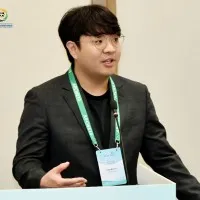
Sang Min Lee이상민
Ph.D. Candidate in Artificial Intelligence
Seoul National University
I'm a Ph.D. candidate in the Interdisciplinary Program in Artificial Intelligence at Seoul National University, working in the Hi-performance Structural Engineering Lab with Prof. Thomas H.-K. Kang. My research asks how machine learning can make the inspection and design of buildings more reliable: automating impact-echo testing of concrete, monitoring structural condition from sensor data, estimating wind loads from fewer measurements, and grounding language models in building codes.
Before the Ph.D., I received an M.S. in structural engineering and a B.S. in architectural engineering, with a double major in electrical and computer engineering, both from SNU.
News
- Paper on condition-mutated hard negatives for Korean building-code retrieval at JCDL 2026.
- SNU AI Fellowship for Fall 2026, my fourth semester as a fellow.
- Visiting researcher at the National Weather Center, University of Oklahoma (Oct–Nov), hosted by Prof. Yang Hong.
- Impact-echo paper published in Journal of Nondestructive Evaluation, following papers in Journal of Structural Engineering (July) and ACI Structural Journal (April).
- Excellence Award at the SNU AI Paper Competition.
- Organizing committee member, 28th WEIK Annual Conference at SNU.
Research
Automated non-destructive testing
Impact-echo testing can find defects hidden inside concrete, but reading the signals still takes an experienced inspector. I train models that classify impact-echo responses automatically and build an edge-AI system that runs them on site, including on liner-plate-backed concrete in nuclear containment buildings.
8 papersStructural health monitoring
Anomaly detection and system identification for buildings using deep support vector data description, and crack-image classifiers light enough to run on-device.
6 papersData-driven wind engineering
Predicting façade wind pressures from fewer pressure taps, clustering taps by their time histories, reconstructing wind-load time series, and estimating design wind speed from satellite imagery.
7 papersLanguage models for building codes
Retrieval-augmented generation over structural and wind design codes, domain-specialised language models, and retrieval training with condition-mutated hard negatives for safety-sensitive Korean code clauses.
3 papersMachine learning for concrete properties
Earlier work comparing machine-learning models for the compressive strength of concrete and the shear strength of prestressed concrete.
3 papersPublications
-
CoMuRAG: Condition-mutated hard negatives for safety-sensitive Korean building-code retrieval
ACM/IEEE Joint Conference on Digital Libraries (JCDL 2026)Conference
-
Experimental study on impact-echo response characteristics of defects behind liner plates in nuclear containment buildings (in Korean)
Proceedings of the Korea Concrete Institute Conference, 38(2)Conference
-
Modified impact-echo testing of liner-plate-backed concrete in nuclear containment buildings
ACEM26 / Structures26Conference
-
Deep learning-based reconstruction of wind load time histories from reduced pressure tap measurements (in Korean)
Proceedings of the 29th Annual Conference of the Wind Engineering Institute of Korea, 29(1), 73–74Conference
-
Development of an edge-AI impact-echo system for detecting internal defects in concrete (in Korean)
Proceedings of the Korea Concrete Institute Conference, 38(1), 267–268Conference
-
Applying impact-echo testing to simulated internal defects in concrete behind liner plates of nuclear containment buildings (in Korean)
Proceedings of the Korea Concrete Institute Conference, 38(1), 273–274Conference
-
Machine learning assisted method for automated impact-echo testing of concrete structures
Journal of Nondestructive Evaluation, 44(4), 121JournalPaper
In this study, the feasibility of a machine learning model for the automatic classification of impact-echo testing results was investigated. A machine learning model with features such as instantaneous frequency and spectral entropy extracted from time series data was compared with two different approaches, including conventional peak frequency and a deep learning model. To construct a robust and flexible model, an open-source database from two organizations performed by different testing operators and equipment was used to train and develop the universal classifier. The model was evaluated for its ability to classify the type of defects as well as their presence, and the results showed that shallow delamination can be detected more accurately than other types of defects. The proposed machine learning model showed reliable and promising results and has the potential to improve the efficiency of impact-echo testing in concrete structures.
-
Lightweight alternative machine learning model for automating concrete crack image classification
ACI Structural Journal, 122(5)JournalPaper
In this study, the challenge of automating concrete crack image classification by developing a lightweight machine learning model that balances accuracy with computational efficiency was addressed. Traditional deep learning models, while accurate, suffer from high computational demands, limiting their practicality in on-site applications. This study's approach used the random forest (RF) classifier combined with histogram of oriented gradients (HOG) and local binary patterns (LBP) for feature extraction, offering a more feasible alternative for real-time structural health monitoring. Comparative analysis with the convolutional neural network (CNN) model highlights this model's significantly reduced size and inference times, with only a marginal compromise in accuracy. The results demonstrated that the RF models, particularly RF with LBP, are well-suited for integration into resource-constrained environments, paving the way for their deployment in portable, on-site diagnostic systems in civil engineering. This study contributed a novel perspective to the field, emphasizing the importance of efficient machine learning solutions in practical applications of structural health monitoring.
-
Multiclass deep support vector data description for structural health monitoring
Journal of Structural Engineering, 151(12)JournalPaper
Ensuring the structural integrity of building is critical for maintaining public safety, necessitating reliable methods for the detection of internal defects. In practice, however, obtaining data from compromised structures poses significant challenges because most available data come from buildings in normal condition. This study addresses this issue by introducing a novel, real-time defect detection approach for structural health monitoring using multiclass Deep Support Vector Data Description (SVDD), a semisupervised deep learning model. The proposed method leverages only normal condition data from the target structure for training, enabling the identification of anomalies without requiring prior defect data. Kernel density estimation (KDE) was integrated, a robust statistical technique, to further enhance the model's predictive accuracy. The proposed methodology was validated using publicly available data from a three-story shake table experiment, demonstrating superior performance compared to existing anomaly detection techniques. Although traditional machine learning methods for this task typically achieve a maximum average accuracy of 58.68%, the KDE-enhanced multiclass deep SVDD developed in this study significantly outperforms these methods, demonstrating a remarkable average accuracy of 88.11%. Comprehensive parameter optimization was conducted to determine the optimal model configuration. The defect detection framework presented in this study offers a significant advancement in real-time structural health monitoring, providing a powerful tool for the proactive maintenance and safety assurance of buildings.
-
Retrieval augmented generation for assistance of using wind load design codes
The 10th Asia-Pacific Conference on Wind Engineering (APCWE10)Conference
-
Clustering of façade wind pressure coefficients on concrete buildings using deep learning (in Korean)
Proceedings of the Korea Concrete Institute Conference, 37(1), 13–14Conference
-
Monitoring of concrete buildings using multiclass deep SVDD (in Korean)
Proceedings of the Korea Concrete Institute Conference, 36(2), 345–346Conference
-
A large language model framework specialized for building structural design codes using a mixture-of-experts architecture (in Korean)
Proceedings of the Korea Concrete Institute Conference, 36(2), 343–344Conference
-
Multi-sphere deep SVDD for system identification of building structure
The 2024 World Congress on Advances in Civil, Environmental, and Materials Research (ACEM24)Conference
-
Representation learning for classification of concrete crack images
The 2024 Structures Congress, Seoul, KoreaConference
-
Lightweighting concrete crack image classification machine learning models for on-device AI
Proceedings of the Korea Concrete Institute Conference, 36(1), 57–58Conference
-
A methodology for predicting expected wind speed from satellite images using artificial neural networks (in Korean)
Journal of the Wind Engineering Institute of Korea, 27(4), 135–142Journal
-
Machine learning applications for smart impact-echo testing (in Korean)
Review of Architecture and Building Science (Architectural Institute of Korea), 67(3), 47–50Journal
-
Automating impact-echo testing with machine learning (in Korean)
Proceedings of the Korea Concrete Institute Conference, 35(1), 187–188Conference
-
Machine learning application to automated impact-echo test for concrete structures
Seoul National UniversityMaster's thesis
-
Comparison of performance for predicting compressive strength of concrete using machine learning
Journal of the Korea Concrete Institute, 34(5), 505–513Journal
-
Clustering wind pressure tap using dynamic time warping
8th European-African Conference on Wind Engineering (EACWE2022), Bucharest, RomaniaConference
-
Shear strength prediction of prestressed concrete based on machine learning
The 2022 Structures Congress, Seoul, KoreaConference
-
Machine learning-based prediction of concrete compressive strength (in Korean)
Proceedings of the Korea Concrete Institute Conference, 34(1), 179–180Conference
-
Prediction of wind pressure coefficients on high-rise building façade using LSTM RNN model for sensor reduction
The 2021 World Congress on Advances in Structural Engineering and Mechanics (ASEM21)Conference
-
Prediction of façade wind pressure coefficients on concrete buildings using long short-term memory recurrent neural networks (in Korean)
Proceedings of the Korea Concrete Institute Conference, 33(2), 155–156Conference
-
Prediction of façade wind pressure coefficients on concrete buildings using LSTM networks (in Korean)
Proceedings of the Korea Concrete Institute Conference, 33(1), 189–190Conference
-
Design of an illuminance-responsive automatic shading device and an IoT-based motion optimization algorithm (in Korean)
Department of Architecture and Architectural Engineering, Seoul National UniversityBachelor's thesis
-
Optimal operation of energy storage systems (ESS) in microgrids (in Korean)
Department of Electrical and Computer Engineering, Seoul National UniversityBachelor's thesis
-
Applications and generalization of the cycloid using GeoGebra (in Korean)
Korea Science Academy of KAISTGraduation research
-
A research on generalization and applications of cycloid
GeoGebra Global Gathering 2015, Linz, AustriaEarly work
-
Boolean rings and their generalization (in Korean)
Newsletter of the Korea Society of Mathematical Education, 31(4), 11Early work
-
Algebraic structures with non-commutative multiplication (in Korean)
Korea Science Academy of KAISTR&E report
-
A generalization of integral domains (in Korean)
Newsletter of the Korea Society of Mathematical Education, 30(5), 17Early work
Nothing matches.
Patents
-
2023
AI-based defect detection system inside concrete members
Lee, S. M., & Kang, T. H.-K.
Korean Patent 10-2611457, registered
-
2022
Wind load estimation system based on artificial intelligence
Lee, S. M., & Kang, T. H.-K.
Korean Patent 10-2480382, registered
Experience
-
Mar 2021 – present
Graduate Research AssistantCurrent
Hi-performance Structural Engineering Lab, Seoul National University
- Advisor: Prof. Thomas H.-K. Kang
- Machine learning for impact-echo testing, structural health monitoring, wind engineering, and building codes
-
Oct–Nov 2025
Visiting Researcher
National Weather Center, University of Oklahoma, Norman, OK, USA
- Hydrometeorology and Remote Sensing Lab, hosted by Prof. Yang Hong
- Visiting student, School of Civil Engineering and Environmental Sciences, Gallogly College of Engineering
- Collaborated on machine learning for remote sensing and wind engineering
-
Dec 2018 – Feb 2021
Undergraduate Research Assistant
Seoul National University
- Jan–Feb 2021, HpSE Lab: wind pressure coefficient prediction for wind-resistant building design
- Oct 2019 – Feb 2020, SNUCEM: AHP analysis for improving military dining facilities
- Dec 2018 – Feb 2019, AEPRL: designed and built an IoT device (hardware and software) that detects surface condensation indoors
-
Jul–Aug 2018
Research Engineer (Intern)
Chungyeon Architects, Seoul, Korea
- Data analysis for building energy performance evaluation with ECO2, AutoCAD, and Python
Research projects
-
2021–2027
Hyper-converged Forensic Research Center for Infrastructure
NRF Korea, funded by MSIT
-
2024–2025
Smart City Innovative Technology Demonstration Project
KAIA, funded by MOLIT
-
2024
AI for Construction Research Project
SNU, funded by Sejong Construction
-
2023
Outstanding Patent Prototype Development Project
Seoul National University
Teaching
-
2022–2024
Architecture and AI
Spring 2022, 2023, and 2024
- Taught hands-on sessions on deep neural networks
-
2021–2022
Introduction to IoT, AI, and Big Data
Spring and Fall 2021 and 2022; head TA in Fall 2022
- Evaluated IoT projects and ran Arduino UNO labs
-
2021–2022
IoT and Creative Engineering Design
Fall 2021 and Spring 2022
- Evaluated IoT projects; labs on Arduino UNO, Teensy, ESP32, and STM boards
-
2021–2022
Creative Engineering Design
Fall 2021 and Spring 2022
- Evaluated IoT projects; labs on Arduino UNO and ESP32
-
2022
Structural Experiment and Material
Spring 2022
- Euler buckling, truss deflection, and two-way shake-table seismic design experiments
-
2021
Mechanics of Materials for Architectural Engineering
Fall 2021
- Problem sessions on structural engineering fundamentals
-
2021
Prestressed Concrete
Fall 2021
- Course management, with a focus on post-tensioned structures
-
2021
Computation in Architectural Engineering
Spring 2021
- MATLAB labs for structural engineering students
Education
-
2023–2027
Ph.D. in Artificial IntelligenceExpected
Interdisciplinary Program in Artificial Intelligence, Seoul National University
- Research: AI for resilient infrastructure and wind engineering
- Advisor: Prof. Thomas H.-K. Kang
-
2021–2023
M.S. in Structural Engineering
Department of Architecture and Architectural Engineering, Seoul National University
- Thesis: Machine Learning Application to Automated Impact-Echo Test for Concrete Structures
- Advisor: Prof. Thomas H.-K. Kang
-
2016–2021
B.S. in Architectural Engineering
Department of Architecture and Architectural Engineering, Seoul National University
- Double major: Electrical and Computer Engineering (2017–2021)
-
2013–2016
Diploma
Korea Science Academy of KAIST, science high school for gifted students
- Senior Vice President, 24th Student Council; Deputy Head of International Affairs, 23rd Student Council
- Exchange programs at Moscow Chemical Lyceum, Russia (2014) and G.T. (Ellen Yeung) College, Hong Kong (2015)
Awards
Honors
-
2025–2026
SNU AI Fellowship
Interdisciplinary Program in Artificial Intelligence, SNU. Four semesters, Spring 2025 to Fall 2026.
-
2025
Excellence Award, SNU AI Paper Competition
Interdisciplinary Program in Artificial Intelligence, SNU. Included travel support to attend NeurIPS.
-
2023–2024
SNU AI Graduate School Scholarship
Interdisciplinary Program in Artificial Intelligence, SNU. Four semesters, Spring 2023 to Fall 2024.
-
2022
Outstanding Teaching Assistant Award
College of Engineering, SNU. Fall 2022.
-
2022
Outstanding Presentation Award
Korea Concrete Institute. Spring Conference 2022.
-
2021
Sen Engineering Group Scholarship
Department of Architecture and Architectural Engineering, SNU. Fall 2021.
-
2019
Gwanakhoe Foundation
Gwanakhoe, SNU. Spring and Fall 2019.
Certifications
-
2025
Big Data Analysis Engineer
Korea Data Agency. Jul 2025.
Earlier (2012–2018)
-
2018
Commendation from the Mayor of Uiwang
For leading the Uiwang Bugok center of Edushare Korea.
-
2016
Achievement Award
Korea Science Academy of KAIST, for student council service.
-
2013
Honorable Mention, Korea Olympiad in Informatics
High school division.
-
2012
Gold Prize, Korea Physics Competition for Middle School Students
Korean Physical Society.
-
2012
Silver Prize, Gyeonggi Middle School Math and Science Competition
Gyeonggi Provincial Office of Education.
-
2012
Gold Prize, Anyang Middle School Math and Science Competition
Anyang-Gwacheon Office of Education.
Service
Reviewing
-
2024–present
Wind and Structures
Reviewer. SCIE journal in wind engineering.
Organizing
-
2025
28th WEIK Annual Conference
Organizing committee member. Held at Seoul National University.
Memberships
Since 2021
Korea Concrete Institute (KCI), regular member
Since 2021
American Concrete Institute (ACI), student member
Since 2023
Architectural Institute of Korea (AIK), regular member
Since 2023
Korea Institute for Structural Maintenance and Inspection (KSMI), student member
Since 2023
Wind Engineering Institute of Korea (WEIK), student member
Since 2025
American Society of Civil Engineers (ASCE), student member
Outreach
-
2016–2018
Edushare Korea
Taught mathematics to students from low-income families. Mathematics teacher; lead teacher of the Uiwang Bugok center.
Contact
- 201612445@snu.ac.kr
- Google Scholar
- Sang Min Lee
- ORCID
- 0000-0002-6822-5252
- GitHub
- concrete-sangminlee